
Custom Reusable Silicone Air Fryer Liners | OEM & ODM Manufacturer for Wholesalers and Distributors
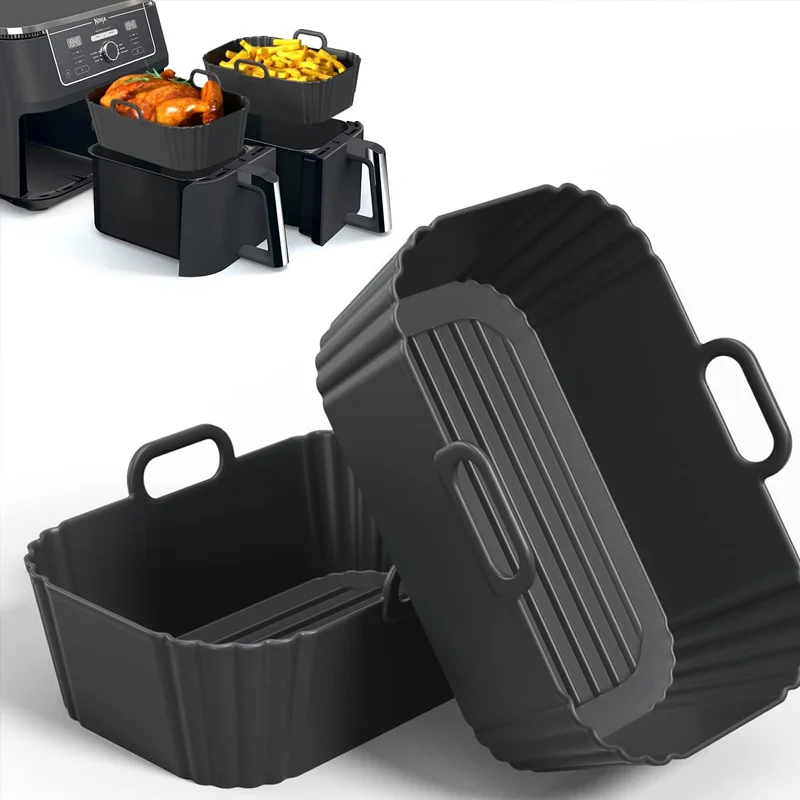
These reusable silicone air fryer liners provide a practical solution for cooking, baking, and food preparation in compatible air fryer baskets. Manufactured from flexible silicone, they are designed to create a removable cooking surface that helps reduce direct food contact with the appliance basket and makes post-cooking cleanup more convenient. Available in different shapes, dimensions, and structural designs, these silicone air fryer inserts can be developed for various kitchenware collections and product positioning requirements.
As an OEM and ODM silicone kitchenware manufacturer, we support customized production for kitchenware brands, importers, wholesalers, distributors, and e-commerce sellers. Our manufacturing services cover silicone material selection, product structure development, mold customization, color matching, logo application, and retail packaging. From standard reusable air fryer liners to customized silicone baskets, we help business customers develop products that meet their target market requirements and bulk purchasing plans.
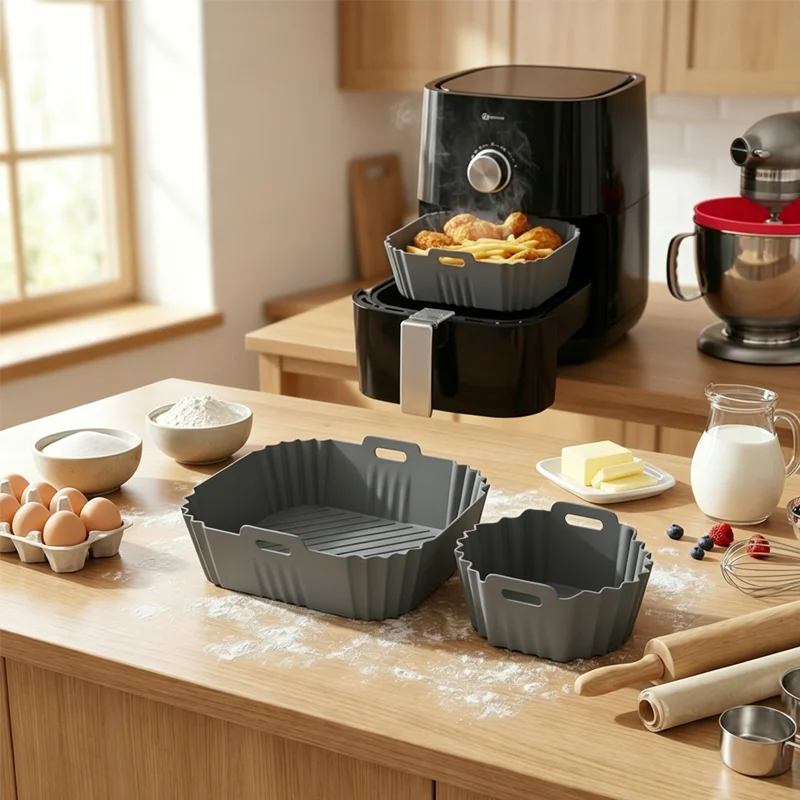
A Practical Cooking Solution with Reusable Silicone Air Fryer Inserts
Reusable Construction for Repeated Kitchen Use
Designed as a reusable alternative to disposable air fryer liners, the silicone construction supports repeated use under the specified operating conditions. Its flexible structure allows users to remove the liner after cooking for washing and subsequent use, making it suitable for reusable kitchen accessory collections.
Raised Edges for Better Food Containment
The raised sidewalls help contain cooking juices, crumbs, and small food particles within the liner. This structure can also help reduce direct contact between food residue and the original air fryer basket.
Flexible Shapes for Different Basket Configurations
Round, square, and rectangular silicone air fryer liners can be developed according to different basket geometries. Customized dimensions and structural details help brands expand their kitchen accessory ranges for different appliance configurations.
Non-Stick Cooking Surface
The smooth silicone surface is designed to facilitate food removal and routine cleaning. Its surface characteristics can be adjusted through material selection and mold design to meet the intended cooking applications.
Drainage and Airflow Structure
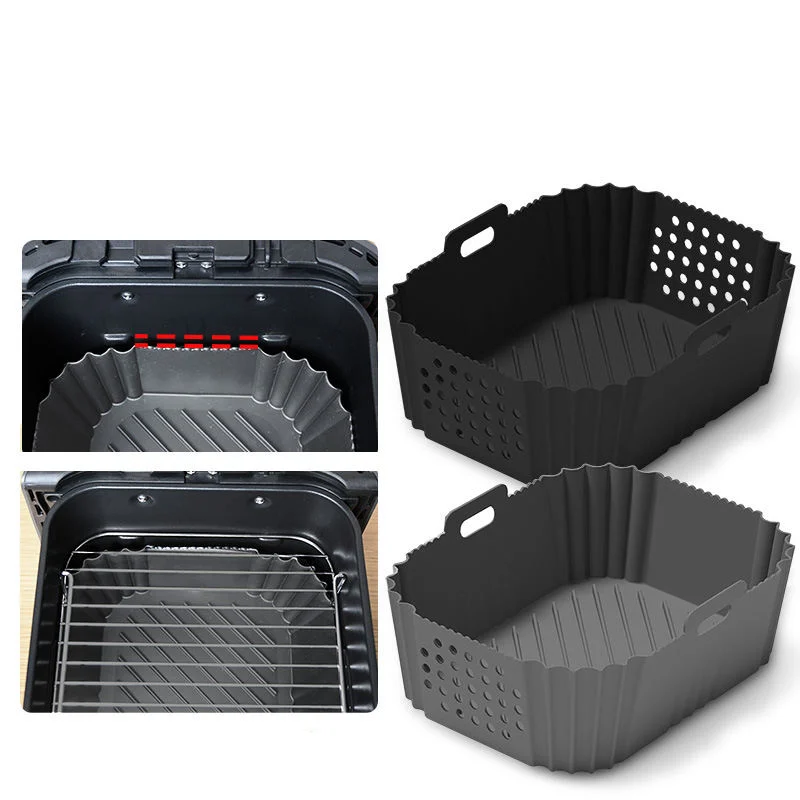
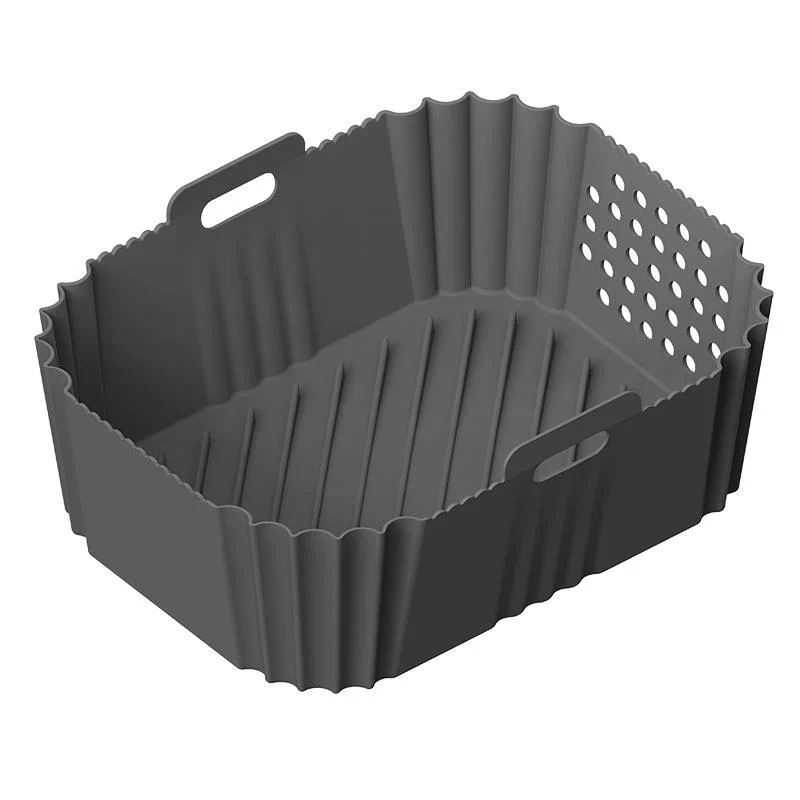
Optional perforations, raised bottom patterns, and drainage channels can be incorporated into the liner design. These features can be evaluated during product development to balance food support, liquid collection, and hot-air circulation.
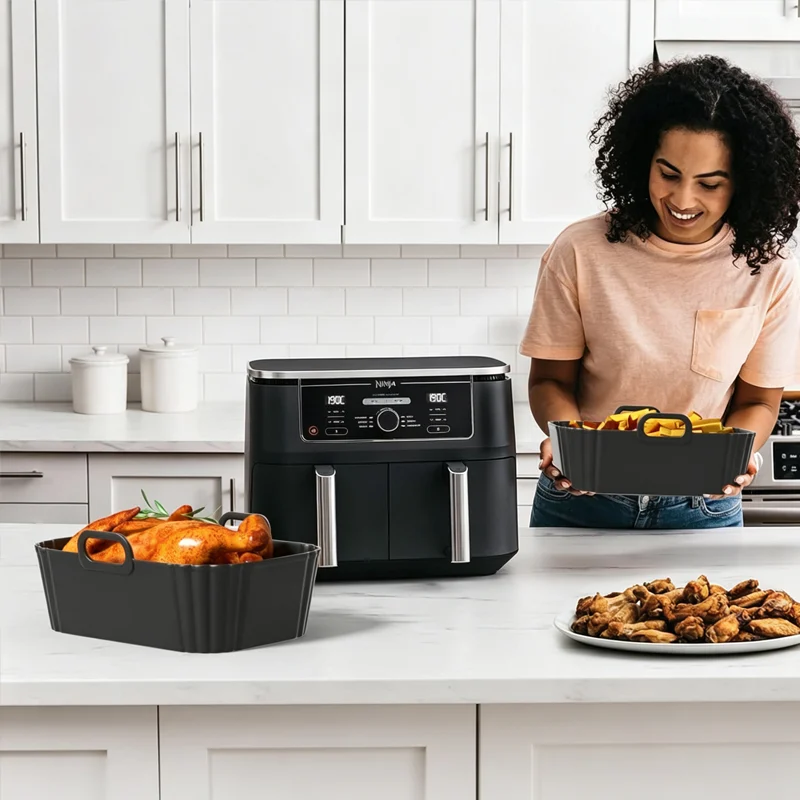
Silicone Air Fryer Basket Design and Structural Engineering
For private-label kitchenware brands, the performance of an air fryer liner depends on more than its overall dimensions. Wall height, bottom thickness, corner radius, drainage features, and basket clearance all influence product usability and compatibility.
Our customized development process considers the following structural parameters:
- Basket Dimensions: Inner length, width, diameter, depth, and corner radius are evaluated against the intended appliance basket.
- Sidewall Geometry: Wall height and thickness can be adjusted to support food containment and convenient removal.
- Bottom Configuration: Flat, raised, textured, and perforated bottom structures are available for different product concepts.
- Handling Design: Integrated handles or grip extensions can be developed to improve removal convenience.
- Material Flexibility: Silicone hardness and wall thickness can be assessed according to the required balance between flexibility and structural stability.
- Mold Details: Draft angles, corner transitions, and parting-line positions are considered during tooling development.
For customers targeting multiple air fryer sizes, we can evaluate a product family based on shared design features and different dimensional configurations.
Custom Silicone Air Fryer Liner Development for Private Label Brands
We provide OEM/ODM development support for businesses looking to launch their own reusable silicone air fryer liner collections.
Product Architecture Development
- Round, square, and rectangular liner designs
- Different basket depths and sidewall profiles
- Solid or perforated bottom configurations
- Optional handles and grip structures
- Customized dimensions for target appliances
Silicone Material and Color Selection
- Silicone formulation selection according to intended applications
- Customized Pantone color matching
- Different surface textures and finishes
- Material hardness adjustment
- Food-contact documentation support according to the selected material and destination market
Brand Identity Integration
- Molded brand logos
- Customized product identification
- Private-label product presentation
- Customized instruction labels
- Retail packaging and barcode integration
Product Line Development
For brands planning a broader kitchenware range, different sizes and shapes can be developed as coordinated product collections. This allows customers to organize product variations for different air fryer basket dimensions, retail channels, and price segments.
Silicone Formulation and Food-Contact Requirements for Air Fryer Accessories
Material selection is an important consideration when sourcing reusable silicone air fryer liners for commercial distribution. Buyers should evaluate the silicone formulation according to the intended cooking temperature, repeated-use conditions, and applicable food-contact requirements.
Our material development discussions can cover:
- Silicone grade and formulation selection
- Hardness and flexibility requirements
- Odor and appearance consistency
- Intended operating temperature range
- Resistance to deformation under specified conditions
- Food-contact compliance documentation
- Color consistency between production batches
Where required, relevant food-contact testing and documentation can be arranged according to the target market and applicable regulations. Specific certifications and temperature ratings should be confirmed for the actual production material rather than assumed for every silicone formulation.
Mold Tooling and Production Planning for Silicone Air Fryer Liners
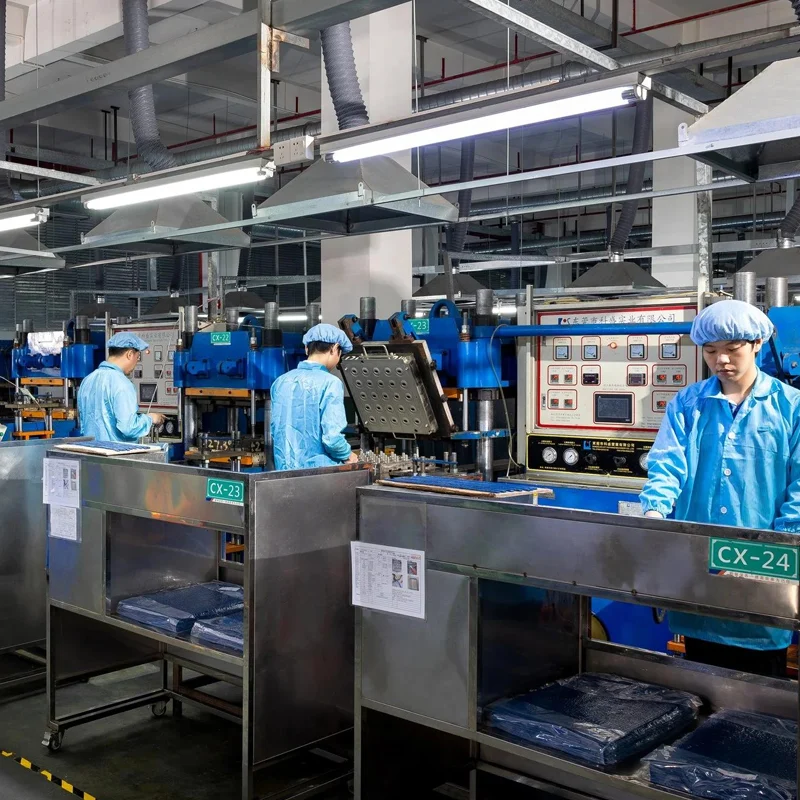
Silicone air fryer liners are commonly produced through compression molding. Mold design and process parameters influence dimensional consistency, surface appearance, wall thickness, and overall production efficiency.
Our production planning can address several important manufacturing considerations:
Mold Configuration: Tooling is developed around the selected liner geometry, including bottom patterns, sidewalls, corner details, and optional handles.
Material Preparation: Silicone compounds are prepared according to the selected formulation and product specifications.
Compression Molding: Controlled molding conditions are used to form the silicone liner and maintain consistent product geometry.
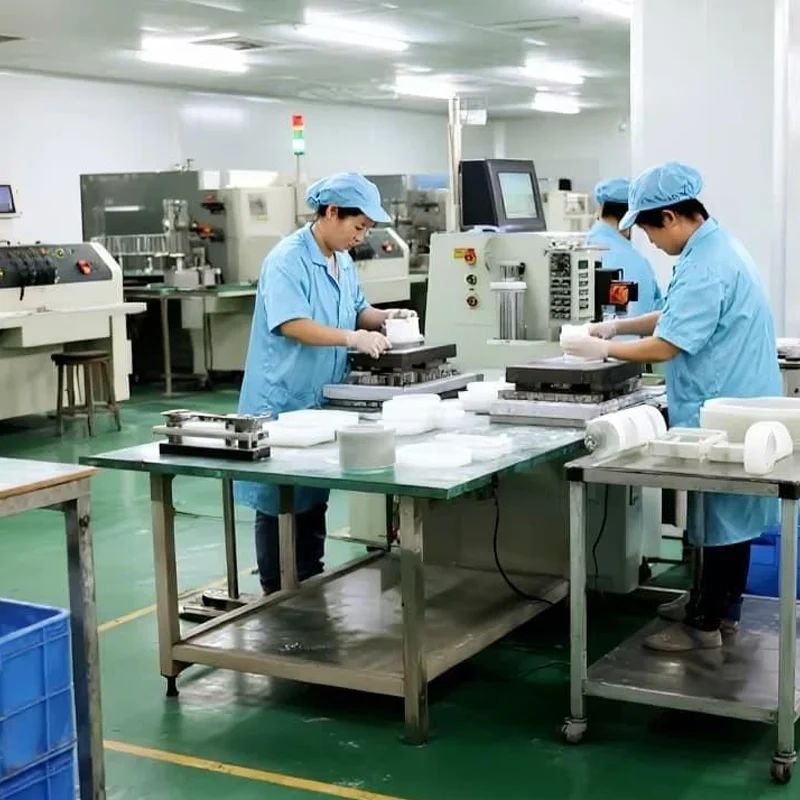
Finishing and Trimming: Excess material and flash are removed, followed by inspection of the finished edges and surfaces.
Final Product Inspection: Dimensional, appearance, and structural checks are performed according to the agreed product specifications.
For customized projects, sample evaluation and mold adjustments can be completed before moving into bulk manufacturing.
Batch Consistency and Inspection Standards for Silicone Kitchenware
For importers and private-label brands, consistency between samples and mass-produced orders is essential for product launches and repeat purchasing.
Inspection planning for reusable silicone air fryer liners can include:
- Dimensional measurement of length, width, diameter, and height
- Sidewall and bottom thickness verification
- Visual inspection for flash, bubbles, surface defects, and contamination
- Color consistency assessment against approved samples
- Flexibility and deformation evaluation
- Surface and edge finishing inspection
- Odor assessment under agreed acceptance criteria
- Packaging quantity and labeling verification
For projects with specific performance requirements, additional testing can be defined based on the selected silicone material, intended operating conditions, and destination-market regulations.
Bulk Order Configuration and Retail Packaging for Air Fryer Liners
Packaging is an important part of private-label product preparation, particularly for kitchenware brands supplying supermarkets, online retailers, and wholesale distributors.
We offer packaging coordination according to the customer’s sales channel and brand requirements.
Available packaging arrangements include:
- Individual OPP bag packaging
- Customized printed retail boxes
- Color box packaging
- Sets containing multiple liner sizes
- Product instruction inserts
- Barcode and product identification labels
- Customized master carton arrangements
For bulk orders, packaging specifications, quantities per carton, carton dimensions, and shipping marks can be confirmed during order planning.
Reusable Silicone Air Fryer Liners for Kitchenware Product Collections
These silicone air fryer liners are suitable for businesses developing reusable cooking accessories and practical kitchenware collections.
Potential commercial applications include:
- Reusable air fryer accessories
- Silicone air fryer basket inserts
- Home cooking and baking accessories
- Kitchenware retail collections
- Private-label cooking utensil ranges
- E-commerce kitchen product lines
- Supermarket and department store kitchenware collections
- Promotional and gift kitchen accessory sets
Their different shapes, sizes, and color options allow brands to create coordinated product assortments for different consumer preferences and retail channels.
Why Source Reusable Silicone Air Fryer Liners from an OEM Manufacturer?
Selecting a manufacturing partner involves more than comparing unit prices. Buyers also need to evaluate tooling feasibility, material consistency, customization flexibility, and the supplier’s ability to support repeat orders.
Our OEM/ODM cooperation can support:
- Customized product dimensions and structural designs
- Silicone formulation and color selection
- Mold development for private-label products
- Logo and packaging customization
- Sample development before mass production
- Defined inspection requirements for bulk orders
- Production planning for repeat purchasing
- Export-oriented packaging coordination
We work with kitchenware brands, importers, wholesalers, and distributors to develop silicone products according to commercial specifications and project requirements.
RFQs
1. What information should we provide to receive an accurate OEM quotation?
Please provide your target liner shape, dimensions, wall height, bottom structure, silicone material requirements, estimated order quantity, logo requirements, and packaging specifications. If you have an existing product sample, technical drawing, or air fryer basket dimensions, these can help us evaluate tooling requirements and quotation accuracy.
2. Can you manufacture silicone liners compatible with specific air fryer basket dimensions?
Yes. We can develop customized round, square, and rectangular liners based on customer-provided basket measurements or physical samples. Compatibility should be evaluated using the basket’s internal dimensions, corner radius, usable depth, and required clearance. We recommend confirming the target appliance dimensions before finalizing the mold.
3. How do you determine the MOQ for customized silicone air fryer liners?
MOQ depends on the product structure, mold investment, silicone material, color requirements, production setup, and packaging configuration. Standard designs and fully customized products may have different order requirements. We can evaluate the project based on the selected design and expected purchasing volume.
4. Can you provide food-contact compliance documents for the silicone material?
Food-contact documentation depends on the selected silicone formulation and the destination market. Please specify the countries or regions where you plan to distribute the product and the applicable requirements. We can discuss the available material documentation and the testing needed to support your compliance process.
5. How can we verify that the liner will maintain its shape during repeated high-temperature cooking?
The required operating temperature and exposure duration should be established before material selection. We recommend evaluating samples under the intended cooking conditions, including dimensional stability, deformation, odor, and surface condition after repeated heating cycles. The final temperature rating should be supported by the selected material specifications and relevant test results.
6. What factors affect tooling costs and sample development time?
Tooling costs depend on liner dimensions, overall geometry, bottom patterns, handle structures, mold cavities, and customization complexity. Sample development time also depends on material confirmation, mold fabrication, and the number of design revisions. We can provide a project-specific estimate after reviewing the product drawing or reference sample.

 English
 German
 Spanish
 Portuguese
 French
 Russian