
Are you designing a compact medical pump, a portable respiration module, or a space-constrained consumer dispenser and wondering whether an umbrella check valve (mushroom valve, elastomeric umbrella valve, or silicone umbrella valve) is the right choice? At YJCPolymer we manufacture custom umbrella check valves and subsystems using advanced silicone rubber injection molding techniques. Below is a practical, engineer-focused guide that explains the problems with conventional check valves, how umbrella check valves work, their distinct advantages, typical engineering applications, and the manufacturing process we use to deliver reliable, production-ready parts.
Understanding Umbrella Check Valve Issues
Traditional mechanical check valves (spring-loaded poppets, ball valves, and wafer check designs) solve many flow-control problems but introduce tradeoffs that matter for OEM device engineers:
-
Size and weight — metal bodies and springs increase footprint and assembly cost.
-
Cracking pressure variability — lightweight, mass-produced springs or poor tolerances cause inconsistent opening pressures.
-
Noise and wear — moving metal parts create mechanical noise, wear, and particulate generation.
-
Compatibility constraints — metal components and certain elastomers may not tolerate aggressive chemicals or sterilization cycles.
These limitations reduce reliability in miniature, disposable, or sterile applications where small form factor and consistent low-pressure performance are critical.
Introducing the Umbrella Check Valve
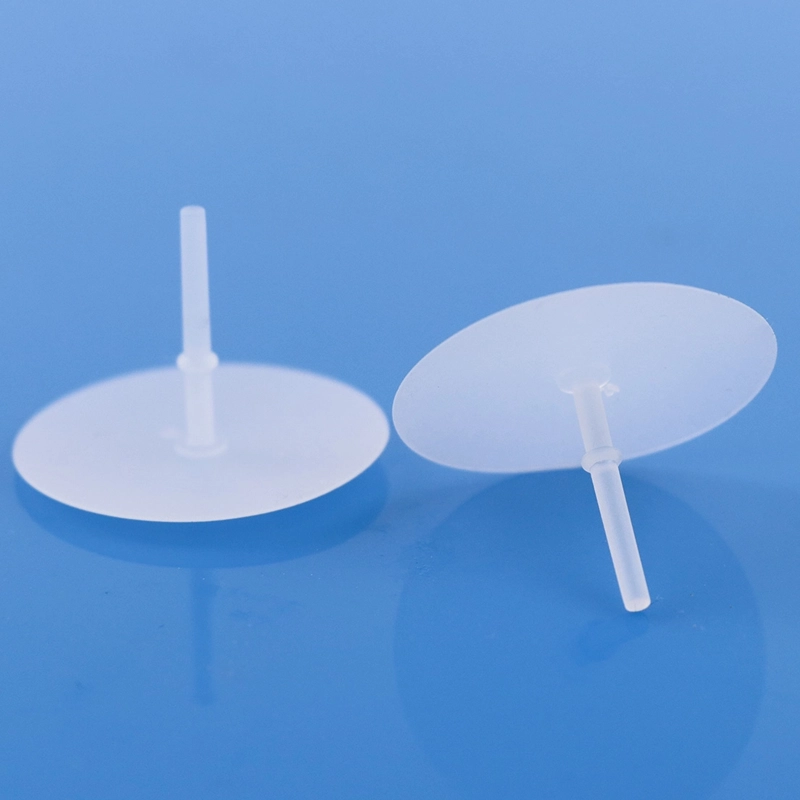
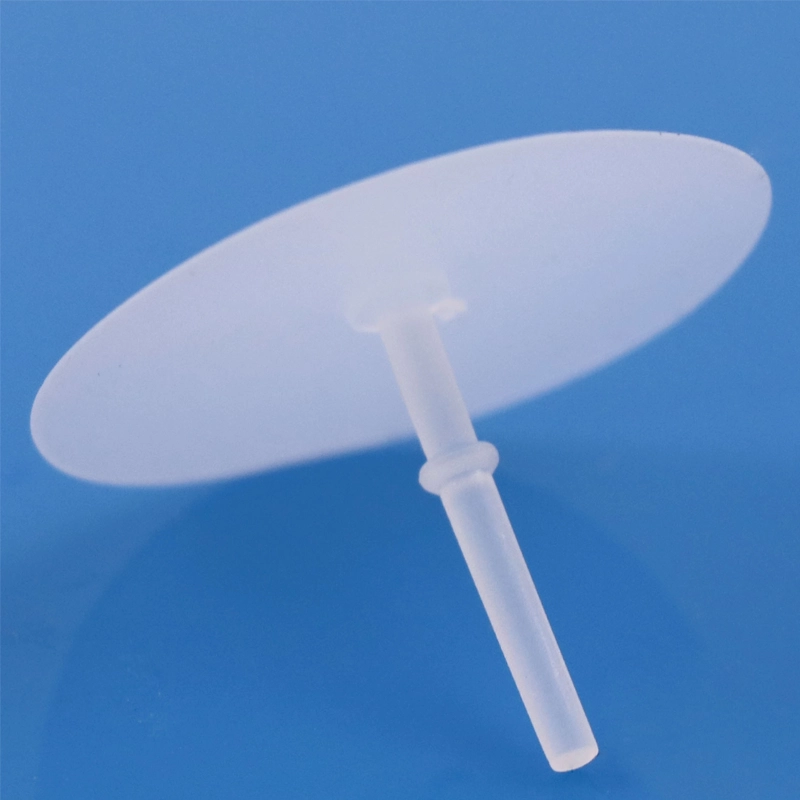
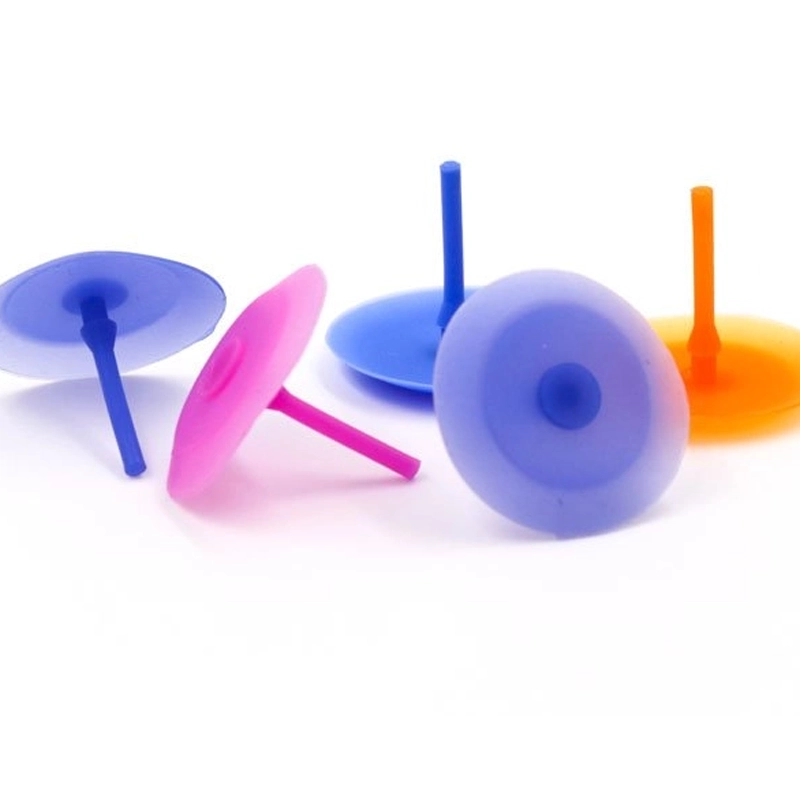
An umbrella check valve is a one-way elastomeric valve formed from a thin flexible dome (the “umbrella”) attached to a stem or flange. The umbrella geometry acts both as sealing surface and restoring spring. Under forward pressure the dome lifts and allows flow; upon pressure reversal the dome reseats and provides a leak-tight seal. Variants include molded silicone umbrella valves, fluorosilicone versions for solvent resistance, and pop-in cartridges designed for rapid assembly into plastic housings.
Because they are simple, often monolithic parts produced by silicone rubber injection molding (LSR), umbrella valves are ideal for OEMs that need compact, low-cost, maintenance-free flow control.
Distinct Advantages
-
Ultra-low cracking pressure and consistent performance
Properly tuned umbrella valves can operate reliably below 2 psi (or lower) with tight tolerances—ideal for breathing circuits, low-pressure pneumatic controls, and sensitive dosing systems. -
Silent, maintenance-free operation
No metal springs or hard moving parts means quiet function and minimal wear over millions of cycles. -
Compactness and integration
Umbrella valves can be molded as pop-in inserts or overmolded into manifolds and caps, reducing part count and assembly cost. -
Material versatility and sterilization resilience
Using medical-grade LSR (VMQ) or specialty FVMQ/FMQ provides biocompatibility, wide temperature range, and compatibility with autoclaving or chemical sterilants. -
Cost and scalability
High-volume LSR tooling amortizes well; multi-cavity molds and automated molding lines deliver low unit costs at scale. -
Cleaner operation for sensitive systems
Elastomeric seating reduces particle generation and eliminates metal debris risk—crucial for analytical and medical devices.
Applications in Engineering
Umbrella check valves are widely used across OEM domains:
-
Medical & life-science equipment — patient valves, exhalation ports, single-use respiratory circuits, infusion line check valves.
-
Analytical & instrumentation — microfluidic one-way elements, sample-handling manifolds.
-
Consumer devices — beverage dispensers, travel bottle valves, coffee machines (pressure relief).
-
Automotive & small engines — venting and low-pressure check functions where a metal spring would corrode or add complexity.
-
Micro pumps & portable devices — low cracking pressure and tiny footprint enable battery-powered and wearable products.
Manufacturing Process of Umbrella Check Valve
At YJCPolymer we follow a rigorous engineering and production flow to ensure each custom umbrella check valve meets mechanical and regulatory expectations:
-
Design & DFM
-
Define target cracking pressure, flow curve, and packaging interface.
-
Simulate slit/dome geometry and wall thickness to ensure consistent opening and reseal characteristics.
-
-
Material selection
-
Choose LSR grades for medical/food use (platinum cured), or FVMQ/FKM for fuel/solvent resistance. Specify durometer and compression set targets.
-
-
Tooling & mold design
-
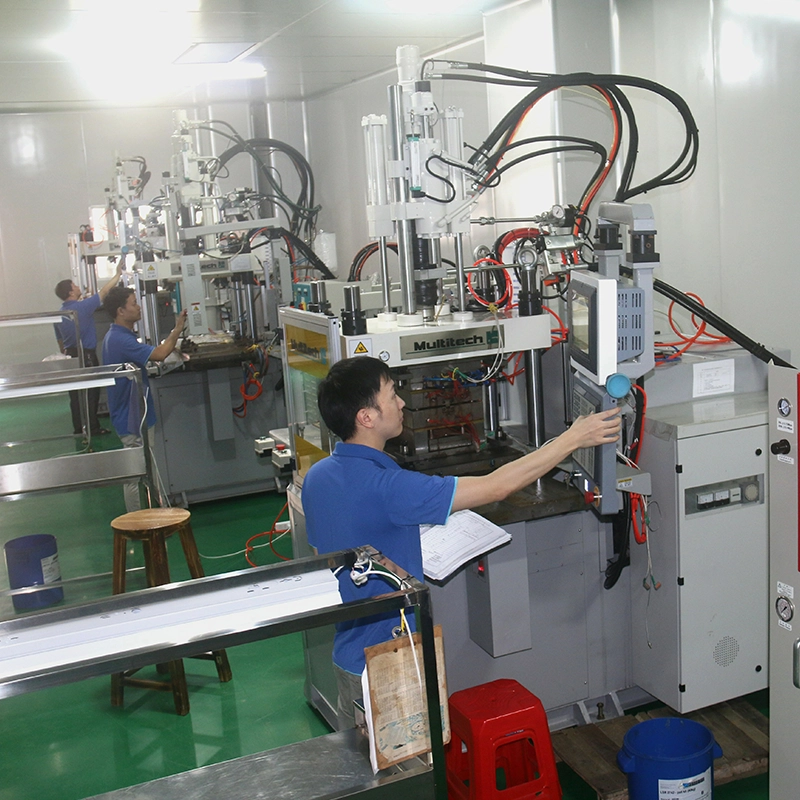
High-precision multi-cavity LSR molds with hot-runner or cold-runner systems. Include features for pop-in ribs, alignment bosses, and venting. Tool steel hardness, surface finish, and cavity balance are controlled to yield uniform parts.
-
-
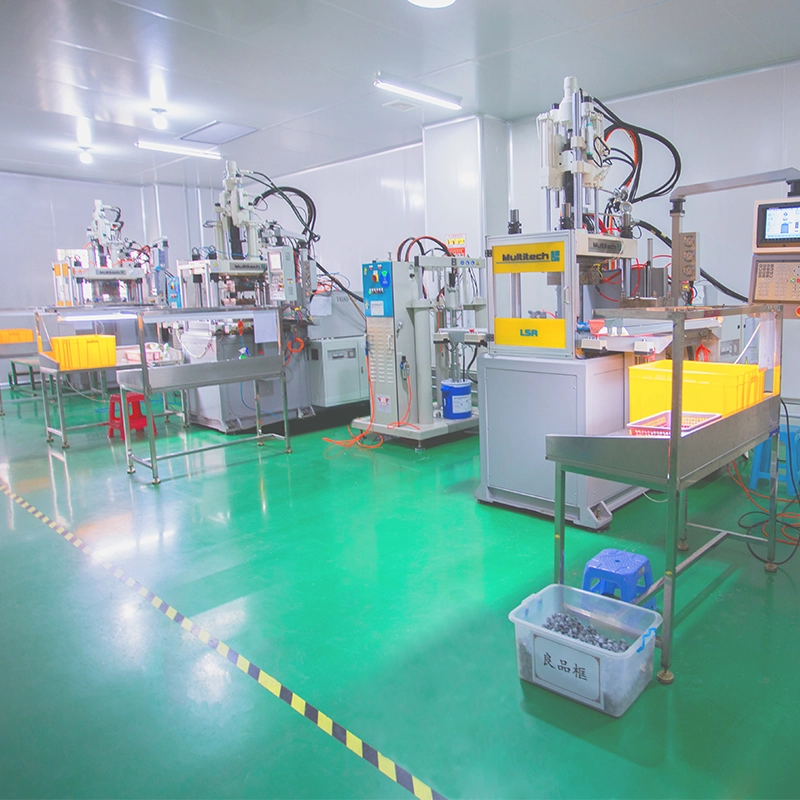
Injection de LSR / Overmolding
-
Metered LSR injected under controlled temperature and pressure. For integrated components, we overmold valves into rigid housings (insert molding) to produce pre-assembled modules.
-
-
Post-cure & finishing
-
Thermal post-cure to stabilize mechanical properties; automated deflashing and trimming for consistent slit and skirt edges.
-
-
Quality inspection & AOI
-
Automated optical inspection (AOI) for slit geometry, dimensional checks via CMM, and color/visual standards. SPC is maintained on critical dimensions.
-
-
Functional testing
-
Cracking/opening pressure tests, flow vs. pressure curves, leak/drool tests under inverted storage, cycling life tests (tens of thousands to millions of cycles), and material compatibility checks with customer fluids.
-
-
Traceability & regulatory support
-
Batch coding, material CoAs, and testing documentation for medical or food approvals when required.
-
Conclusion
For OEM device engineers seeking a compact, quiet, and reliable one-way valve, the umbrella check valve (silicone umbrella valve, mushroom valve, elastomeric check valve) offers compelling technical and commercial advantages. At YJCPolymer we combine silicone rubber injection molding expertise with application engineering to deliver custom Umbrella Check Valve solutions optimized for cracking pressure, chemical compatibility, and scalable production.
Want to evaluate umbrella valves for your device? Send us your target cracking pressure, intended fluid/gas, cap or manifold interface, and expected annual volume. Our engineering team will produce a DFM review, prototype plan, and functional test protocol so you can move from concept to validated production with confidence.
 French
  English
  German
  Spanish
  Portuguese
  Russian