
Industry Background: The Evolution of Bathroom Components
Shifting Regulatory Frameworks for Water Efficiency
The global bathroom fixtures industry is undergoing a significant transformation driven by strict water conservation regulations. Agencies such as the U.S. Environmental Protection Agency (EPA) through its WaterSense program, and the European Water Label, have established rigorous flow-rate limitations. These regulatory standards require OEM brands to engineer highly precise internal waterways and spray plates, placing unprecedented demands on mold accuracy and dimensional stability.
The Transition to High-Performance Polymers
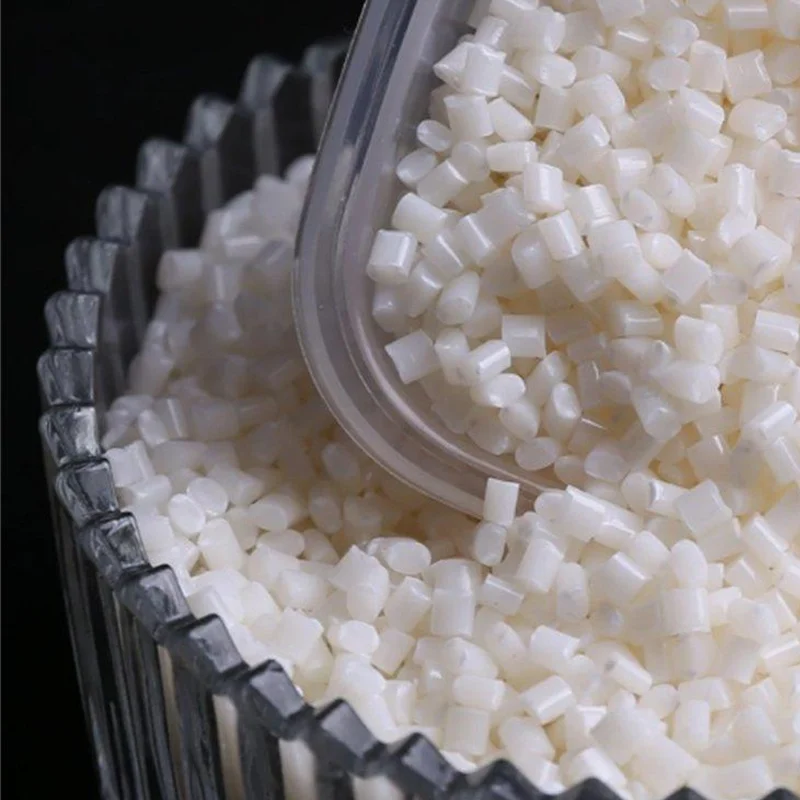
Historically, brass and metal alloys dominated bathroom fixtures. Today, high-performance engineering polymers—such as Acrylonitrile Butadiene Styrene (ABS), Polycarbonate (PC), and Liquid Silicone Rubber (LSR)—have become the industry standard. This material shift reduces product weight, eliminates heavy metal contamination risks, and allows for complex ergonomic designs that are impossible to achieve through traditional metal casting.
The Impact of Complex Spray Patterns on Tooling
Modern consumers expect multi-functional shower experiences, including massage, mist, and rainfall settings. Each spray mode requires distinct fluid dynamic engineering within the shower head’s internal cartridge and faceplate. Translating these intricate water channels into a manufacturable steel mold requires advanced CNC machining and precise Design for Manufacturability (DFM) analysis to prevent flow restriction and pressure drops.
Why Mold Design Matters for Shower Head OEM Projects
Influencing Long-Term Product Reliability
The mold is the foundation of product quality. In shower head manufacturing, variations of even 0.02mm in the tooling can lead to misaligned internal components, resulting in water leakage, poor pressure distribution, or premature failure of the switching mechanism.
Controlling Mass Production Unit Costs
For procurement teams, the initial tooling investment is only a fraction of the total cost of ownership. Efficient mold design—specifically the layout of cooling channels and runner systems—directly dictates the injection cycle time. A thermally optimized mold can reduce cycle times by seconds, translating to massive cost savings over a high-volume production run.
Mitigating Supply Chain and Assembly Risks
Overly complex multi-part designs increase the risk of assembly errors and supply chain bottlenecks. By utilizing advanced mold designs (such as two-shot molding) to consolidate parts, OEM brands can streamline their Bill of Materials (BOM) and reduce reliance on manual secondary assembly.
Ensuring Compliance with Global Plumbing Standards
A well-engineered mold ensures that the molded plastic parts maintain consistent wall thickness and structural integrity. This is critical for passing rigorous industry testing, including burst pressure tests, thermal cycling, and continuous flow validation required by standards like ASME and WRAS.
Market Observation: Trends Reshaping Shower Head Manufacturing
The Rise of Multi-Functional Spa Experiences
According to a recent industry analysis by Grand View Research, the global plumbing fixtures market is experiencing robust growth, heavily driven by consumer demand for spa-like bathroom experiences. This trend requires OEM brands to develop larger, more complex shower heads with integrated features, pushing the limits of standard injection molding capabilities.
Increasing Demand for Self-Cleaning Silicone Nozzles
Hard water scale buildup is a primary cause of shower head failure. Consequently, the market has almost universally adopted flexible silicone nozzles that allow users to easily rub away calcium deposits. This shift necessitates specialized tooling capable of molding and bonding Liquid Silicone Rubber (LSR) to rigid thermoplastic faceplates.
Sustainability and Scrap Reduction in Molding
Major global brands are prioritizing sustainability in their supply chains. In response, mold engineers are adopting hot runner systems and precision cavity layouts to minimize plastic scrap during the injection process, reducing both material waste and environmental impact.
Core Engineering Considerations for Shower Head Mold Design
Cavity Layout and Runner System Optimization
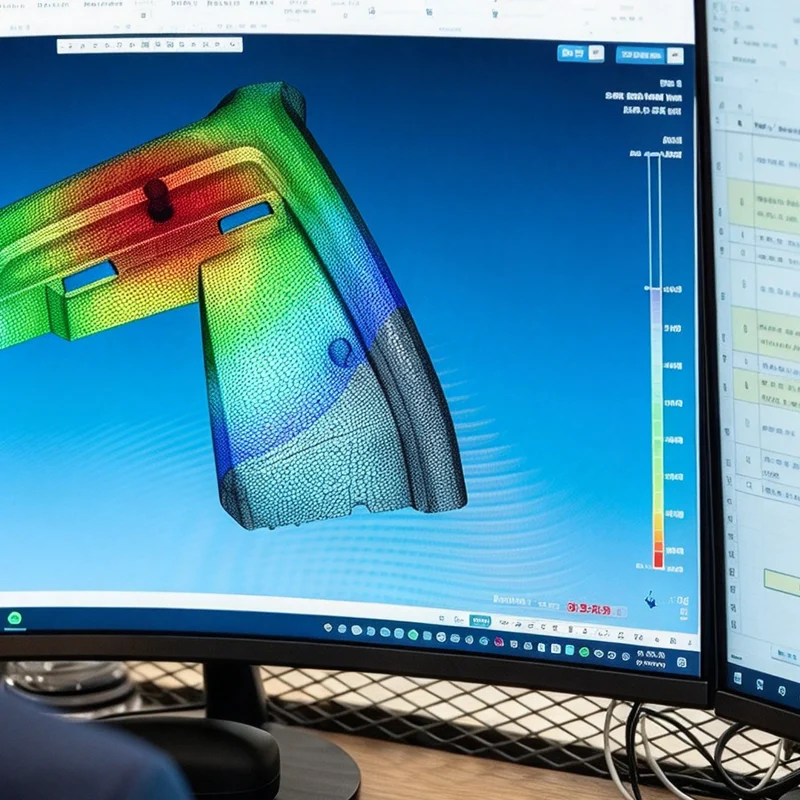
The arrangement of cavities within the mold determines the flow path of the molten polymer. For large shower head housings, maintaining a balanced fill is critical to prevent short shots or uneven packing. Engineers must utilize mold flow analysis software to determine the optimal gate locations and runner dimensions.
Thermal Management and Conformal Cooling Lines
Uneven cooling causes plastic to warp, which is fatal for water-tight bathroom components. Conformal cooling lines—which follow the complex contours of the shower head geometry—are machined into the tool to ensure uniform heat dissipation. This prevents dimensional distortion and ensures the two halves of the shower head will seal perfectly during ultrasonic welding or screw assembly.
Ejection Systems for Complex Geometries
Shower head housings often feature deep drafts and internal mounting bosses for cartridges. Designing an ejection system that applies uniform force without leaving visible pin marks on cosmetic “A-class” surfaces requires a combination of ejector sleeves, stripper plates, and carefully positioned ejector pins.
Managing Draft Angles for A-Class Surface Finishes
To achieve the flawless, high-gloss finishes required before chrome plating or PVD coating, the mold cavity must be polished to a mirror finish (SPI A-1 or A-2). Engineers must incorporate appropriate draft angles (typically 1.5° to 3°) to allow the part to release from the highly polished mold without dragging or scuffing the surface.
Material-Specific Tooling Strategies
Tooling for ABS and PC Outer Housings
ABS and Polycarbonate are the materials of choice for outer housings due to their impact resistance and plating compatibility. Tooling for these materials requires robust venting systems to allow trapped air to escape during the high-speed injection phase, preventing burn marks and ensuring structural integrity.
Precision Molding for Internal Water Channels (POM/PPO)
Internal waterways are often molded from POM (Acetal) or PPO due to their excellent dimensional stability and resistance to hydrolysis. Because these components control water flow, the mold must be machined to exceptionally tight tolerances to ensure smooth internal surfaces that do not generate turbulent water flow or pressure loss.
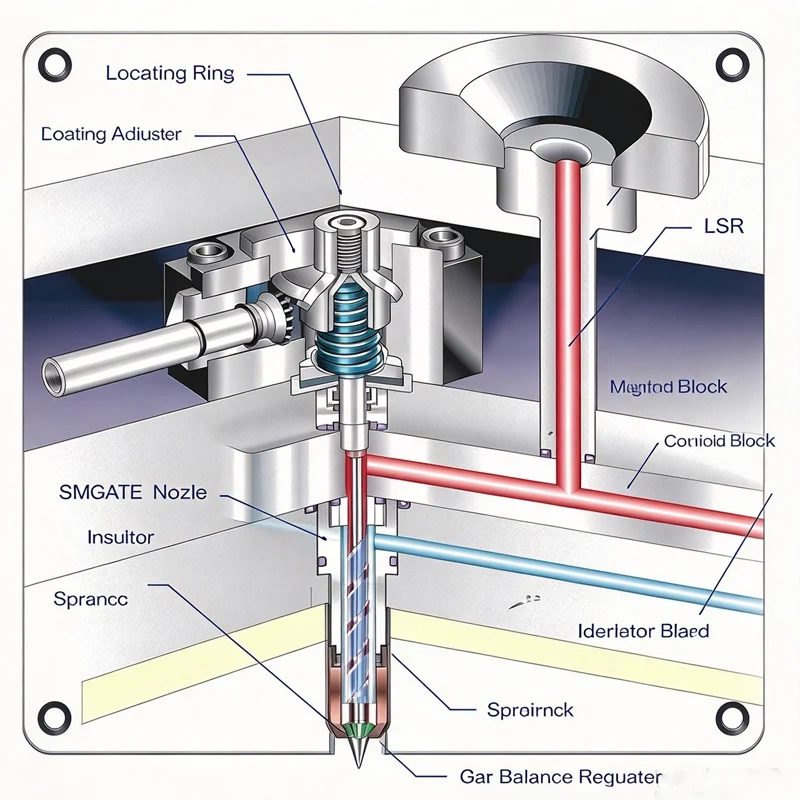
Designing Molds for LSR (Liquid Silicone Rubber) Nozzles
Tooling for LSR is fundamentally different from thermoplastic molding. LSR has an extremely low viscosity before curing, meaning it will flash into gaps as small as 0.005mm. The mold must be machined with zero-tolerance shut-offs. Additionally, because LSR cures via heat (rather than cooling like plastic), the mold must be equipped with precise heating cartridges.
Managing Shrinkage Rates Across Different Polymers
When designing an assembly that pairs an ABS housing with an LSR nozzle plate, engineers must account for the differing shrinkage rates of the two materials. Failure to precisely calculate these rates during the CAD phase will result in parts that do not fit together, leading to costly tooling revisions.
YJC Perspective: Solving Tooling Challenges in Production
Based on YJC Polymer’s experience supporting OEM polymer projects, the most critical manufacturing challenge for shower heads is achieving reliable water-tight seals while maintaining aesthetic perfection.
Addressing Water Pressure Resistance via Mold Precision
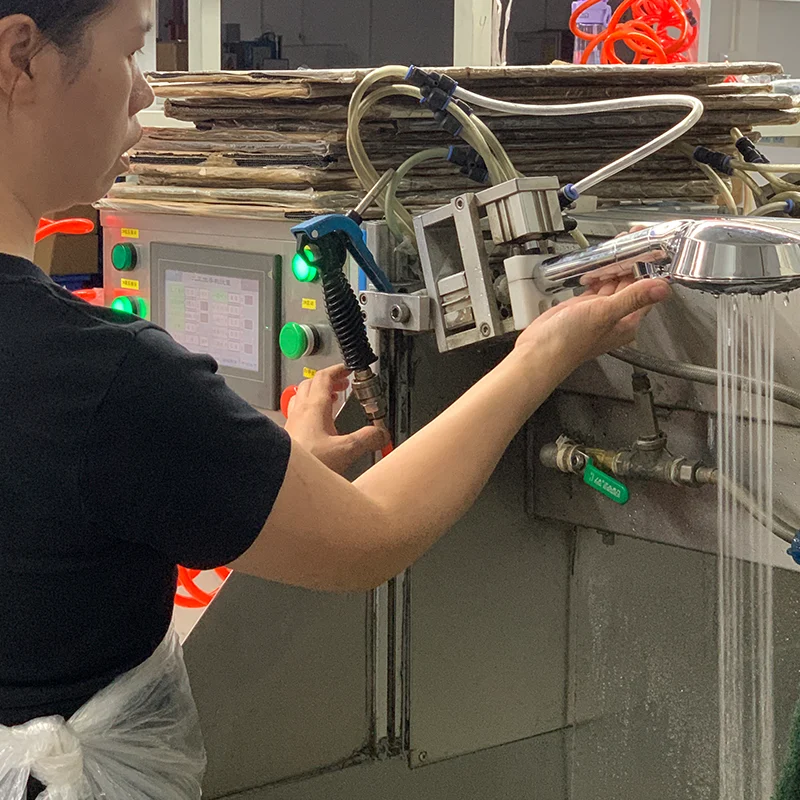
Water leakage is often caused by micro-warpage on the mating surfaces of the shower head. By conducting rigorous mold flow analysis and optimizing the cooling layout, engineers can eliminate the residual stress that causes parts to warp post-ejection, ensuring the components can withstand continuous hydrostatic pressure.
Eliminating Weld Lines on Cosmetic Surfaces
Weld lines occur where two flow fronts of molten plastic meet. On a shower head housing, a visible weld line is a cosmetic defect that will be magnified after electroplating. By optimizing gate placement and adjusting injection speeds, tool designers can relocate weld lines to non-visible internal areas.
Optimizing Cycle Times Without Compromising Dimensional Stability
Aggressively reducing cycle times by ejecting parts too quickly can compromise the structural integrity of the plastic. Finding the exact balance—maximizing output while ensuring the plastic has sufficiently solidified to maintain tight tolerances—requires iterative testing and validation during the first-article inspection (FAI) phase.
Engineering-Driven Polymer Solutions for Global Buyers
When engineering complex bathroom systems, procurement teams and OEM buyers increasingly rely on integrated manufacturing partners to reduce supply chain friction. YJC Polymer provides Custom Polymer & LSR Manufacturing Solutions that encompass both rigid structural plastics and precision silicone components.
Partnering with YJC offers distinct advantages for OEM brands:
-
In-House High-Precision Tooling: By designing and machining molds internally, we reduce development lead times and maintain strict dimensional accountability, eliminating third-party delays.
-
Advanced Multi-Shot Capabilities: Our ability to combine rigid plastics and soft LSR in a single production cycle eliminates secondary assembly costs and ensures hermetic sealing for water channels.
-
Strict ISO-Certified Quality Control: Every production run is backed by comprehensive dimensional and pressure testing, ensuring all components meet stringent global plumbing standards.
-
Comprehensive DFM Engineering Support: We analyze CAD designs early in the development phase to optimize runner systems, cooling lines, and material selection, directly lowering mass production unit costs and preventing costly mold modifications.
Advanced Manufacturing: Multi-Shot and Overmolding Techniques
The Engineering Value of 2K (Two-Shot) Molding
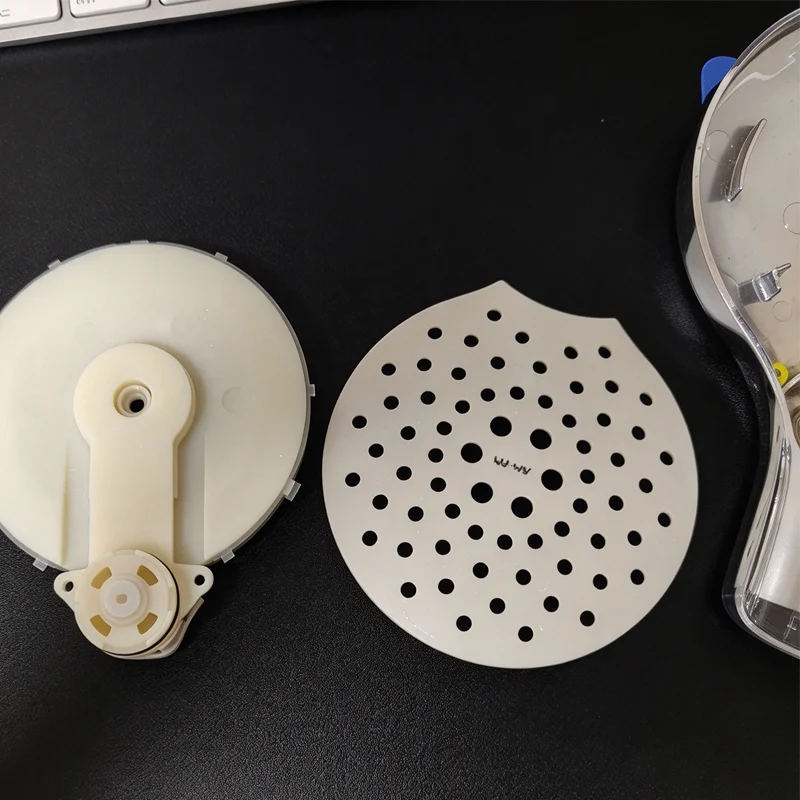
For premium shower heads, 2K molding (injecting two different materials into the same mold) is becoming standard. This process allows the rigid ABS faceplate and the soft LSR nozzles to be molded simultaneously, creating a single, integrated component.
Chemical vs. Mechanical Bonding in Shower Heads
When overmolding silicone onto plastic, the bond must withstand years of thermal expansion and water pressure. Mechanical bonding relies on designing undercuts in the plastic for the silicone to lock into. Chemical bonding utilizes self-adhesive LSR grades that form molecular bonds with the thermoplastic, providing superior durability.
Flash Control in LSR Overmolding
Controlling flash in a two-shot mold requires a perfect shut-off between the rigid substrate and the LSR cavity. The primary mold must produce the plastic part with absolute consistency, as any dimensional variance will prevent the secondary LSR mold from sealing correctly, resulting in silicone leakage (flash).
Reducing Secondary Assembly with Integrated Designs
By adopting overmolding, OEM brands eliminate the need for manual insertion of individual silicone nozzles or the use of adhesives and gaskets. This reduces labor costs, eliminates the risk of missing nozzles, and creates a more robust final product.
Practical Decision Framework for Evaluating Mold Suppliers
Before committing to a tooling investment, OEM sourcing specialists should evaluate suppliers based on the following engineering criteria:
Assessing In-House Tooling Capabilities
✓ Does the supplier possess in-house CNC machining and EDM equipment? Outsourced tooling often leads to poor communication, delayed modifications, and lower precision.
Verifying DFM (Design for Manufacturability) Expertise
✓ Can the engineering team provide detailed mold flow analysis reports, shrinkage calculations, and cooling layout optimizations before cutting steel?
Evaluating Multi-Material Competence
✓ Does the manufacturer have proven experience handling both rigid engineering thermoplastics and high-consistency or liquid silicone rubbers under one roof?
Reviewing Validation and Testing Protocols
✓ Can the supplier execute comprehensive Factory Acceptance Testing (FAT), including dimensional metrology (CMM) and hydrostatic pressure testing, to validate the mold’s performance?
What This Means for Your Product Strategy
Accelerating Time-to-Market Through Concurrent Engineering
Engaging an engineering-driven supplier during the initial product design phase allows for concurrent engineering. Resolving draft angle issues, wall thickness variations, and material compatibility early prevents tool re-cuts, significantly shortening the time from concept to mass production.
Lowering Total Cost of Ownership (TCO)
Investing in high-quality mold design—featuring conformal cooling, hardened steel, and hot runner systems—requires higher upfront capital. However, the resulting reduction in cycle times, minimized scrap rates, and extended mold lifespan (often exceeding 1 million cycles) drastically lowers the total cost of ownership.
Enhancing Brand Reputation via Consistent Quality
In the competitive plumbing fixtures market, brand reputation is tied to product reliability. Tooling engineered for zero-defect manufacturing ensures that every shower head delivered to the end-user performs flawlessly, free from leaks, cosmetic flaws, or premature wear.
Conclusion
Shower head mold design is a complex engineering discipline that sits at the intersection of fluid dynamics, polymer science, and precision machining. For global OEM brands, the mold is the ultimate determinant of product quality, production efficiency, and market success. By prioritizing advanced DFM analysis, multi-material integration, and strict tooling tolerances, brands can mitigate manufacturing risks and deliver superior bathroom solutions to a demanding market.

FAQ
1. What is the typical lead time for a custom shower head mold?
Depending on the complexity of the design, the number of cavities, and whether the tool is single-material or 2K (two-shot), standard lead times for high-precision shower head molds range from 4 to 8 weeks, including DFM analysis and initial T0 sampling.
2. Why is Liquid Silicone Rubber (LSR) preferred for shower nozzles?
LSR is highly flexible, chemically inert, and resistant to extreme temperature fluctuations. Its low compression set ensures the nozzles maintain their shape over time, while its flexibility allows users to easily rub away hard water scale, making it the ideal material for self-cleaning shower faces.
3. How does mold design affect the water flow rate of the shower head?
The mold dictates the internal geometry and surface finish of the water channels. If the mold is not machined with extreme precision, rough internal surfaces or misaligned mating parts can cause turbulence, pressure drops, and inconsistent spray patterns.
4. Can YJC Polymer handle both the plastic housing and silicone nozzles?
Yes. YJC Polymer specializes in comprehensive polymer manufacturing, offering both rigid engineering plastic injection molding and advanced LSR injection molding, enabling complete, integrated manufacturing solutions for OEM bathroom components.
About the Author
Michael is a Polymer Engineering Specialist at YJC Polymer with extensive experience in precision tooling, LSR manufacturing, and custom plastic component development. He focuses on mold design optimization, two-shot injection molding processes, and manufacturing solutions for global OEM customers. With a deep understanding of multi-material integration, Michael supports product development teams across the bathroom, medical, and electronics industries in bringing complex designs to mass production reliably.
References
1. U.S. Environmental Protection Agency (EPA). WaterSense Specification for Showerheads.
https://www.epa.gov/watersense/showerheads
2. Grand View Research. Plumbing Fixtures Market Size, Share & Trends Analysis Report.
https://www.grandviewresearch.com/industry-analysis/plumbing-fixtures-market
3. International Organization for Standardization (ISO). ISO 9001 Quality management systems.
https://www.iso.org/iso-9001-quality-management.html
Request Engineering Review
✔ 20+ Years of Precision Mold Design & Polymer Manufacturing Experience
✔ Complete Plastic Housing and LSR Nozzle Solutions
✔ Professional DFM Engineering Support from Concept to Production
✔ Strict ISO-Certified Quality Control and Flow Testing
✔ Reliable Manufacturing Partner for Global OEM Brands
Whether you are developing complex multi-function shower heads, custom silicone nozzles, or complete bathroom components, YJC Polymer provides engineering-driven OEM manufacturing support.Contact our engineering team to upload your CAD files and request a comprehensive DFM analysis for your next tooling project.
 French
  English
  German
  Spanish
  Portuguese
  Russian