
At YJCPolymer, we manufacture high-precision silicone dispensing valves and support OEMs with full custom service and a true one-stop service from design and prototyping to volume production. Silicone dispensing valves look simple, but performance differences between suppliers are huge — and those differences determine leakage, shelf life, dosing accuracy, and user safety. Below I walk through the practical, manufacturing-focused differences you should evaluate when choosing a supplier and explain why those differences matter for B2B customers.
What is a Silicone Dispensing Valve?
A silicone dispensing valve is a small, normally-closed elastic component that controls the flow of fluids (water, gels, adhesives, cosmetics) from a container. Common forms include cross-slit valves (molded slits that open under pressure) and one-way check valves. They must combine tight sealing, repeatable opening pressure, controlled flow, and long-term durability — often while meeting food-contact or medical-grade standards.
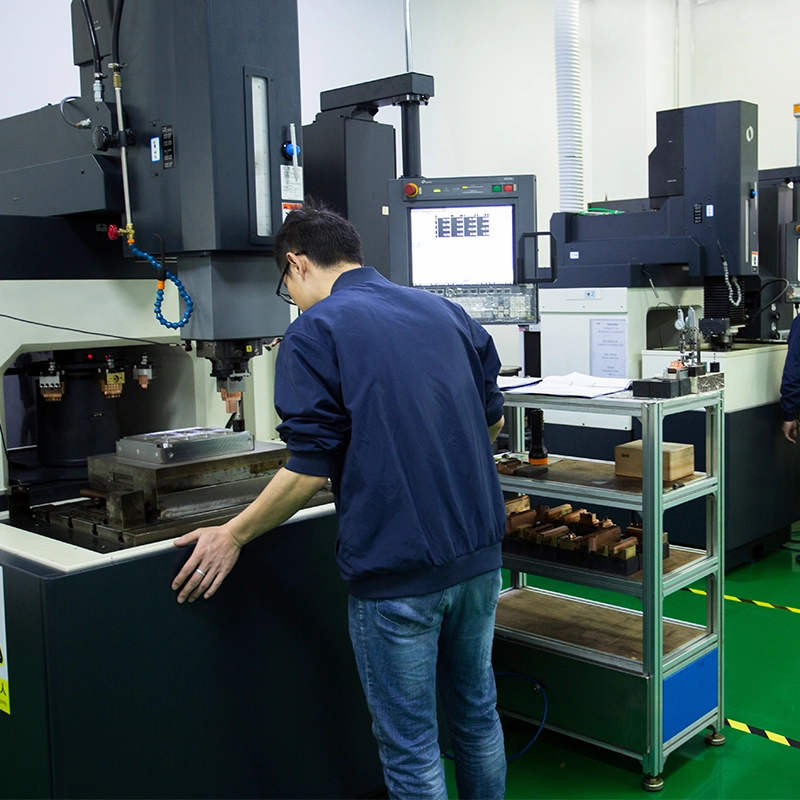
Key Differences Among Suppliers
Material Differences: Cost-Saving Silicone vs Food-Grade Liquid Silicone
Not all silicones are equal. Some suppliers use low-cost general-purpose elastomers that save money up-front but have higher extractables, shorter fatigue life, and worse tear strength. High-quality suppliers use platinum-cured food-grade LSR or medical-grade HCR formulations that deliver low extractables, stable mechanical properties across temperature, and long fatigue life — essential for valves that see repeated flexing.
Why it matters: material chemistry drives leak performance, shelf stability, and regulatory compliance.
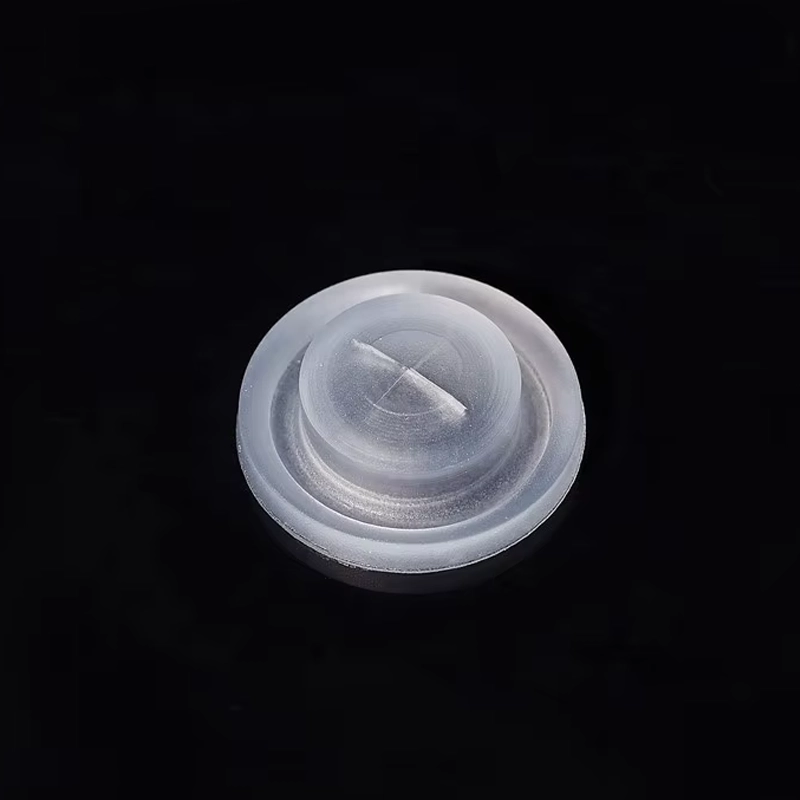
Mold Cavity Differences: Blind High Cavities vs Stable Consistency
Tool design — whether deep blind cavities or shallow, well-supported cavities — affects packing, part release, and dimensional control. Poor cavity design leads to inconsistent slit geometry and variable opening pressures between cavities. High-quality manufacturers optimize cavity shape, venting, and runner layout to ensure each valve behaves the same.
Why it matters: inconsistent cavities = inconsistent dose volumes and higher rejects.
Molding Process Differences: Traditional Press vs Fully Automated Liquid Injection Molding
Compression molding or manual press processes can work for simple parts, but automated Liquid Silicone Injection Molding (LIM/LIM) gives superior shot-to-shot consistency, faster cycles, and better control of flash and wall thickness. Fully automated cells also reduce human contamination risk — important for food/medical applications.
Why it matters: process control equals consistency and lower lifecycle cost.
Curing Time Differences: Random vs Precise Vulcanization
Some shops rely on loosely controlled ovens; advanced suppliers use precisely controlled vulcanization (time, temperature, humidity) with in-line monitoring. Precise cure control ensures predictable mechanical properties (durometer, tensile, elongation) and consistent cross-slit memory.
Why it matters: undercured valves leak; overcured valves become brittle.
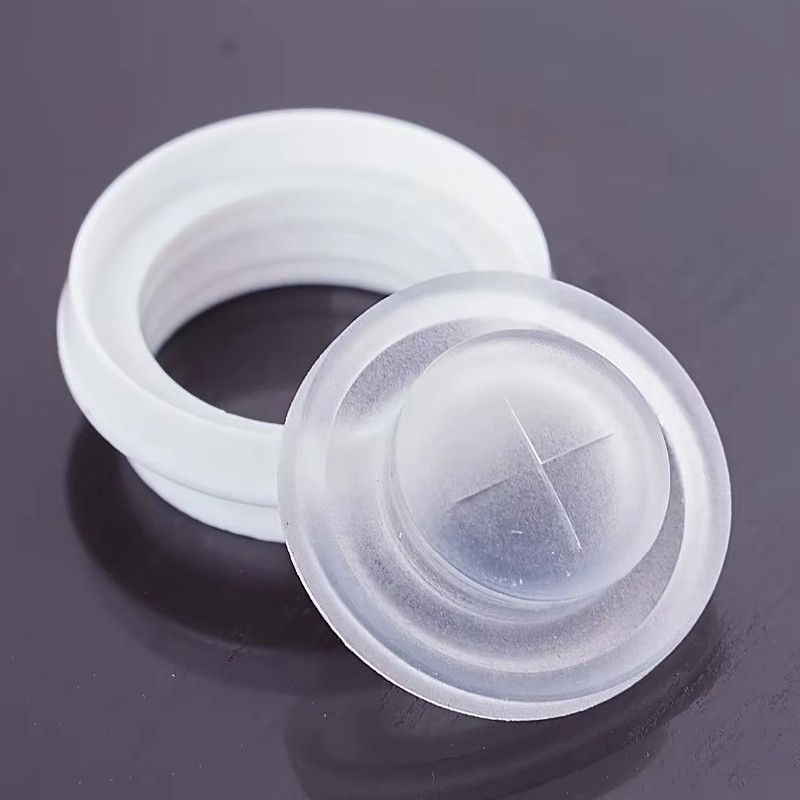
Cross-Slit Precision: Generic vs Custom-Optimized
The cross-slit geometry (angle, depth, slit overlap) is the heart of valve performance. Generic molds produce approximate slits. Custom-optimized slits — developed with CAE, prototype testing, and iterative tooling tweaks — deliver targeted opening pressures and smooth reseal behavior. For some applications we also laser-trim slits post-mold for ultra-tight tolerances.
Why it matters: dosing accuracy and feel are defined by slit geometry.
Burr Control: Detail Matters
Flash and burrs at slit edges produce tearing and leakage. Robust trimming, automated flash detection, and optimized gate location are essential. Suppliers who rely on manual trimming have higher defect rates.
Why it matters: burrs shorten lifecycle and increase rejects.
Wall Thickness: Trial-and-Error vs Structural Optimization
Wall thickness influences opening pressure, burst strength, and tactile response. Leading manufacturers use FEA and process simulation to define thickness that balances flexibility and structural integrity — instead of guessing and iterating on trial runs.
Why it matters: properly engineered walls reduce cycle time and extend product life.
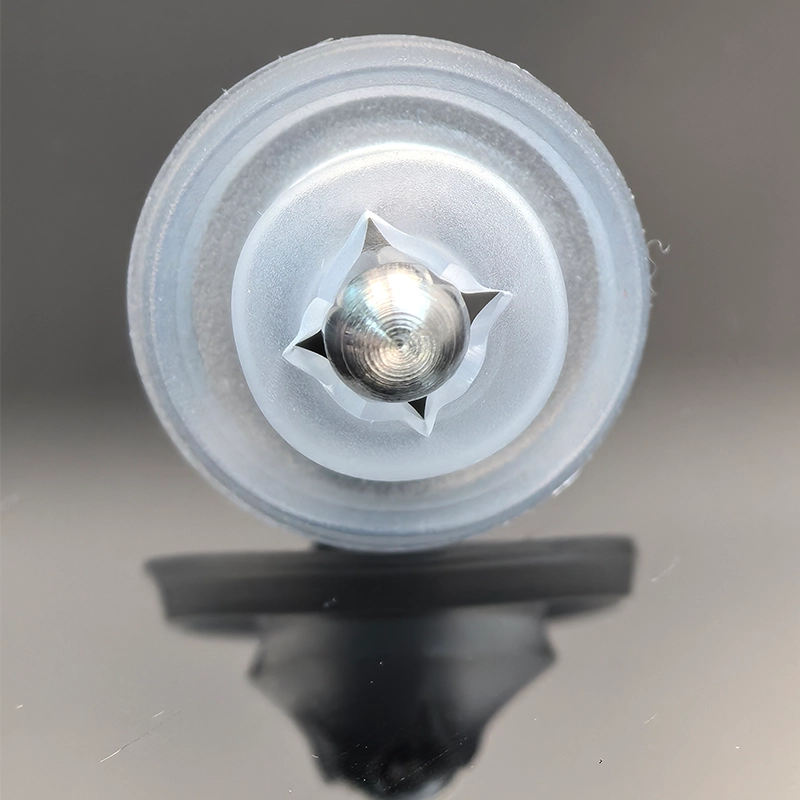
Batch Consistency: One-Off vs Long-Term Reliability
A single good sample is not enough. Some vendors excel at prototypes but fail at scaled production. Production-ready suppliers maintain stable compound batches, strict process control plans, SPC, and lot traceability to ensure every batch performs the same over months or years.
Why it matters: brands and regulatory buyers need predictable supply and documented consistency.
Quality Control: Manual Inspection vs Automated Full Inspection
Manual visual checks miss micro-defects. Advanced suppliers implement automated vision systems, laser dimensional checks, automated leak tests, and statistical SPC. Good QC includes lot-level CoAs, retained sample programs, and documented corrective actions.
Why it matters: automated inspection reduces escapes and simplifies customer qualification.
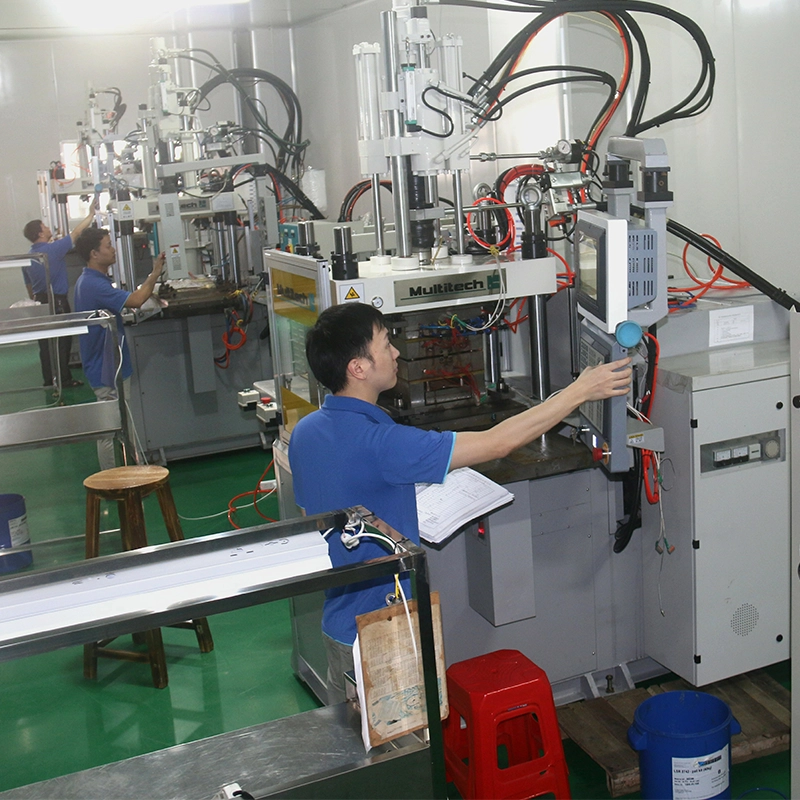
Advantages of YJCPolymer
At YJCPolymer we’ve invested in the systems and engineering that eliminate the common failure modes described above:
- Platinum-cured food-grade LSR and medical-grade formulations with full CoAs and extraction testing.
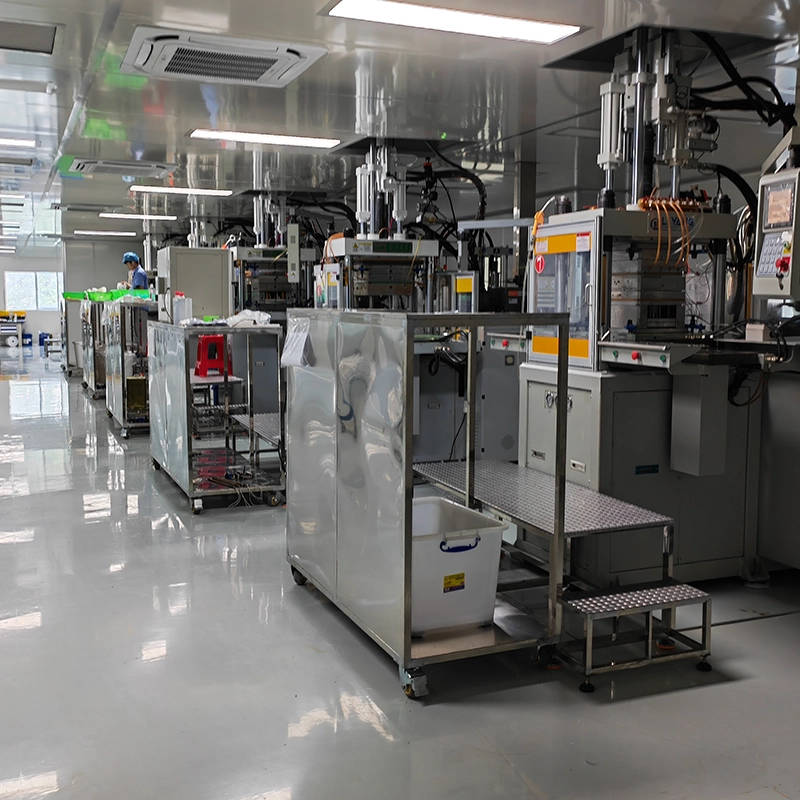
- Fully automated LIM cells for high cavity counts and repeatable shot control.
- Precision tooling and CAE-backed cross-slit optimization; laser post-trim available for ultra-tight tolerances.
- Controlled vulcanization with inline process monitoring and SPC.
- Automated vision inspection, leak testing, and batch traceability as standard.
- End-to-end one-stop service: design support, prototyping, materials testing, molding, secondary assembly, and logistics — all under one roof to simplify supplier management.
- Flexible custom service programs for bespoke cross-slit valves, overmolded assemblies, and integrated dispensing systems.
These capabilities let us deliver custom silicone dispensing valves and custom cross silt valves (cross-slit valves) that meet demanding spec sheets and regulatory checks for food, cosmetic, and medical applications.
Conclusion
When evaluating suppliers for silicone dispensing valves, focus on the full stack — material grade, tooling quality, molding technology, cure control, slit precision, burr control, batch consistency, and automated QC. Cutting corners in any of these areas produces cost savings today but creates performance risk and brand exposure tomorrow.
If you need a partner who combines engineering, compliant materials, and scalable manufacturing, YJCPolymer is ready to help. Contact us to request samples, compare valve opening curves, review test reports, or start a custom development project. Let’s engineer a valve that reliably protects your formula, brand, and end users.
 English
  German
  Spanish
  Portuguese
  French
  Russian