
What Is Changing in Injection Molding Production
Labor Pressure Is Pushing Molders Toward Automation
In Plastics Machinery & Manufacturing’s annual survey, nearly half of respondents said the labor shortage hurt their business in 2025, and 57 percent planned to buy robots or other automation equipment in 2026, according to Plastics Machinery & Manufacturing. For an OEM buyer, this means the suppliers you quote today are changing how they run their floors.
Robots Are Now Routine at the Machine
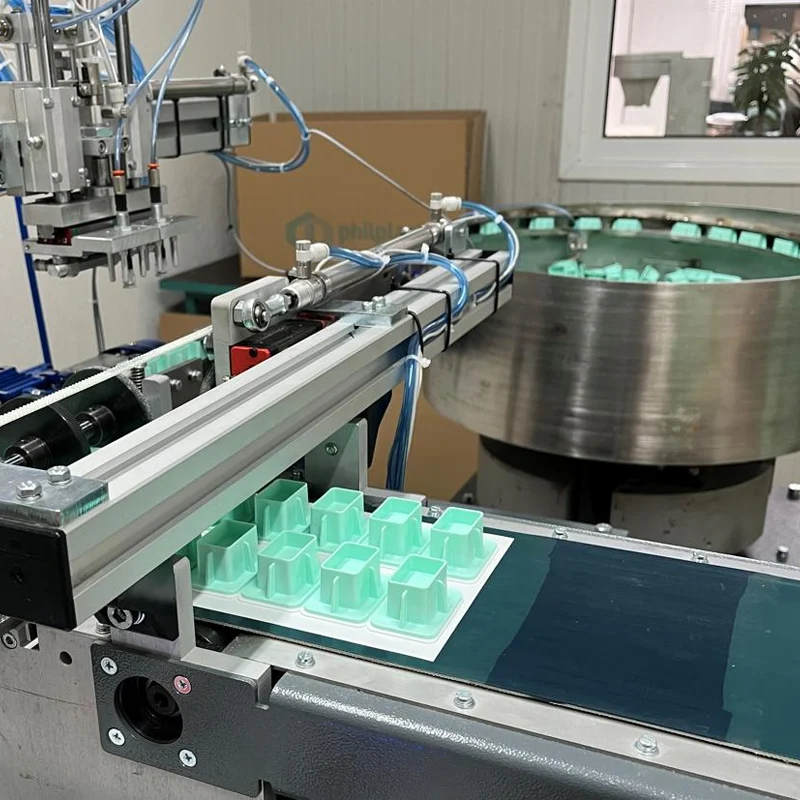
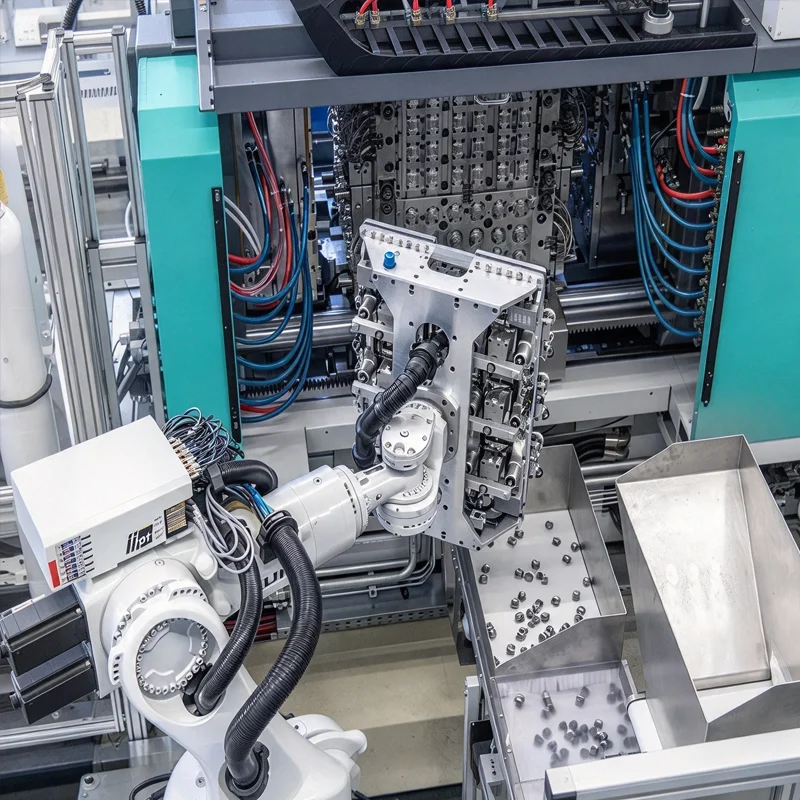
IFR data shows plastic molders added 1,646 robots globally in 2023, as reported by PlasticsToday. The same report notes that robots are particularly valuable for loading and unloading machines, and that the skilled-labor shortage is a main driver among small and mid-sized processors.
AI Is Real but Still Early
The same survey report cautions that AI has not yet penetrated deeply into the industry. Most of the visible change today is in automation and sensor-based monitoring, while AI-driven process control is moving from research toward production. Buyers should expect a mixed picture across suppliers.
Why It Matters for OEM Buyers
Quote Competitiveness and Labor Cost
Labor is one input into piece price. Automated part handling and fewer manual touches can stabilize per-part cost over long runs, but only if the supplier has actually invested. The quote alone does not show this.
Quality Consistency Across Batches
Manual variation shows up as batch-to-batch differences in cosmetics, flash and dimensions. Monitoring and automated handling reduce one source of variation, which matters most for programs with tight tolerances and PPAP requirements.
Lead Time and Delivery Risk
A supplier short of skilled operators carries scheduling risk. Automation can reduce dependence on staffing levels, especially during peak periods.
Transparency of Process Data
As molders collect more process data, buyers gain a new thing to ask about: what is measured, what is recorded and what can be shared during audits and complaint investigations.
Market Observation: What the Evidence Shows
Investment Intent Is Strong
The 57 percent figure from the 2026 buying plans above indicates that automation spending is a stated priority among processors, even in an uncertain economy. This is intent, not completed installation, so supplier-level verification still matters.
Adoption Is Measured in Robots, Not Just Software
The IFR count of 1,646 robots added by molders in 2023 reflects physical automation rather than AI. The first wave of change on the floor is mechanical and sensor-driven.
Research Points Toward Closed-Loop Control
A 2025 study in The International Journal of Advanced Manufacturing Technology notes that even when process parameters are initially optimized, injection molding is affected by ambient conditions such as humidity and temperature. It proposes an AI approach using cavity pressure sensors in critical areas of the mold, reporting 98% accuracy in the study’s implementation. That result comes from one research setting and should not be read as a production guarantee.
Where AI and Automation Show Up on the Molding Floor
Robotic Part Removal and Handling
Robots remove parts, place inserts and stack output. This reduces handling damage and keeps cycle timing consistent. Related work such as insert placement connects to overmolding and insert molding programs.
Cavity-Pressure and In-Process Monitoring
Sensors in the mold track what happens during filling and packing. Deviations can be flagged per shot instead of discovered at final inspection.
AI-Assisted Parameter Guidance
The research direction is software that recommends corrections when a process drifts out of its stable window. Buyers should treat this as an emerging capability and ask suppliers what is in production use, not on a roadmap.
Automated Inspection and Traceability
Vision checks, lot records and recorded process parameters make complaints easier to trace. This supports quality documents such as FAI and PPAP.
Automated Secondary Operations and Assembly
Secondary operations such as heat staking, pad printing and ultrasonic welding are candidates for automation. If your part needs assembly, review the supplier’s assembly solutions as part of the same quote.
Simulation Before Steel Is Cut
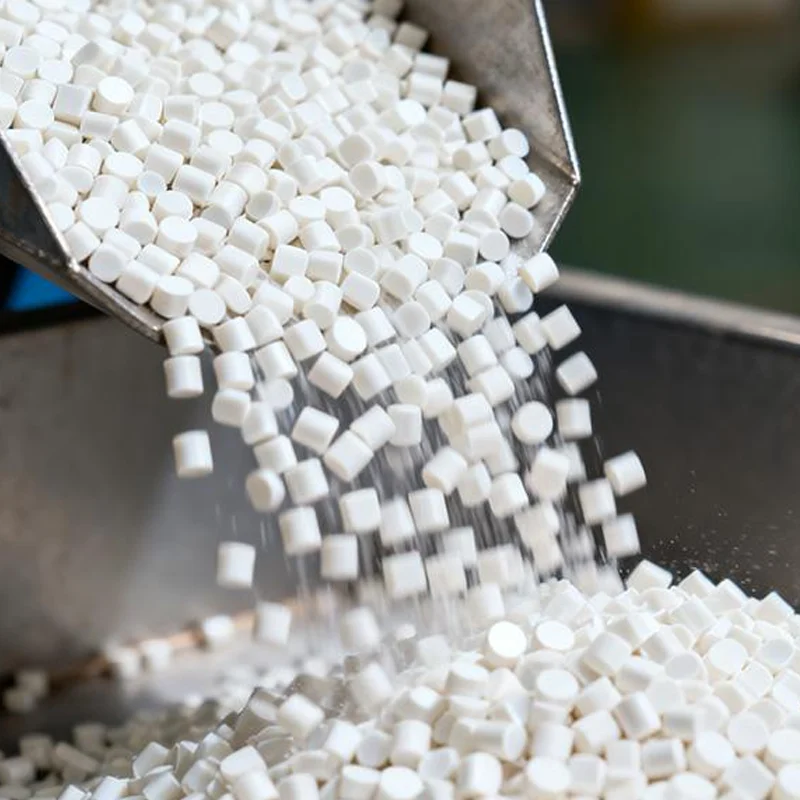
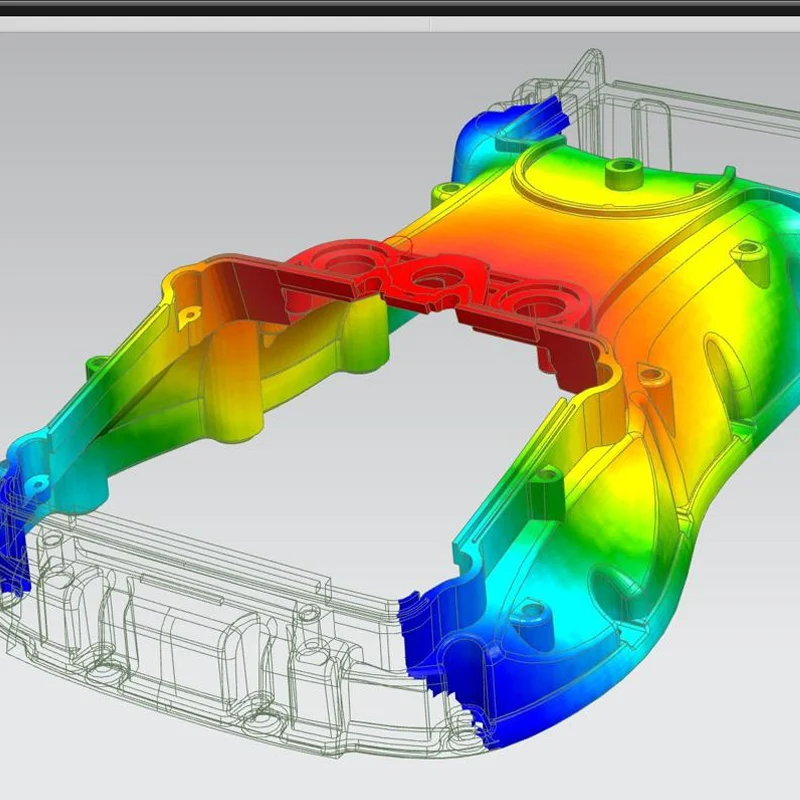
CAE simulation during mold design helps predict filling and defects before tooling begins. The mold is where much of the process stability is decided.
What Automation Does Not Change
Tooling Quality Still Sets the Ceiling
A robot cannot compensate for a poorly cooled or unbalanced mold. Tool design and build quality still determine how stable the process can be, which is why in-house tooling manufacturing matters in supplier selection.
Material Behavior Still Needs Control
Moisture in hygroscopic resins, grade changes and regrind ratios affect parts regardless of automation. Material discipline remains a basic quality control item.
Process Engineers Still Make the Calls
Automated systems flag drift. People decide the cause, whether it is material, tool wear or machine condition. Ask who owns that decision at the supplier.
YJC Perspective: What We Can Document
YJC Polymer focuses on applying measurable engineering controls rather than relying on unverified automation claims. For OEM injection molding projects, our documented capabilities include CAE simulation during mold development, in-house tooling manufacturing, process monitoring support, and structured quality procedures including FAI, FMEA and PPAP. Through integrated mold design and production capabilities, YJC helps customers evaluate potential risks related to filling balance, dimensional stability, material behavior and production repeatability before mass manufacturing begins. While automation technologies such as robotics, sensors and data collection continue to develop across the injection molding industry, we believe their value depends on how effectively they support a controlled manufacturing process. For OEM buyers, the key evaluation factors remain consistent: stable tooling, controlled materials, qualified process parameters, traceable inspection records and experienced engineering support.
What Our Service Page States
YJC’s plastic injection molding page describes CAE simulation in mold design, sensors, data analytics and real-time monitoring under its Industry 4.0 approach, press capacity from 60 to 1,300+ tons, and inspection options that include FAI, FMEA and PPAP. It lists mold cavity machining tolerance of ±0.005 mm and part-to-part repeatability of ±0.01 mm or better. Tolerances for each part are still agreed per project and material.
Quality System Evidence
The page lists ISO 9001 and IATF 16949 certification. YJC’s quality assurance and research and development pages give further background for supplier audits.
Recommended Product Route for Process-Sensitive Programs
For OEM programs where process stability and material range matter, we recommend starting with YJC’s ABS, PE, PP, Nylon PA6 and PA66 plastic injection parts offering. From a buyer’s standpoint, its advantages are:
- Wide resin range: ABS, PC/ABS, PC, POM, Nylon 6, Nylon 6/6, PA12 and others are listed, so one supplier can cover several material needs.
- Tooling and molding together: mold design and manufacturing sit in-house, so DFM feedback reaches the people who build the tool.
- Mold steel options: S136H, 718H, NAK80, P20 and H13 are listed, matched to resin and volume.
- Prototype route: a one-cavity sample mold or 3D printing is available before production tooling.
- Surface and finishing options: matte, texture, polishing, plating, painting and laser engraving.
- Documented controls: FAI, FMEA and PPAP options, with customer-owned tooling and mold maintenance.
For housings and enclosures, see also the electronic plastic housing range.
Practical Decision Framework
Ask About Automation Where It Affects Your Part
Before awarding a program, ask:
✓ Which operations on my part are automated, and which are manual?
✓ Is in-mold or machine process data recorded per lot, and can it be shared on request?
✓ How are deviations handled: stop, sort or adjust?
✓ Which inspection documents (FAI, PPAP) will accompany first shipments?
Ask for Evidence, Not Terminology
“AI-powered” and “smart factory” are not specifications. Ask to see a lot record, a monitoring screen or an audit report from a comparable program.
Match Automation to Your Volume
High-volume programs justify dedicated automation. Low-volume or early-stage programs may be better served by a quick route such as 3D printing for validation before committing to production tooling.
Settle Tooling Terms Early
Confirm who owns the tool, where it is kept and how it can be moved. YJC’s service page states that customers own custom tooling developed for them, with mold maintenance, and that transfers are possible at the requester’s expense.
What This Means for Your Brand
Rethink the Supplier Scorecard
Machine count and tonnage are no longer enough. Add process monitoring, traceability and staffing resilience to your supplier evaluation.
Look at Total Cost, Not Piece Price Alone
Scrap, rework, late deliveries and complaint handling often outweigh small differences in quoted price. Suppliers with stable processes may deliver lower total cost even at a similar quote.
The Next Link in the Chain
Once process capability is understood, the next decision is how your material, tool and supplier network fit together. Material choice and tooling strategy are covered in our related guides below.
Заключение
Automation in injection molding is advancing first through robots and sensors, with AI-driven control still emerging. For OEM buyers, the practical task is to learn what a molder has actually put into production and to ask for the records that prove it. A good tool, controlled materials and trained engineers remain the base on which automation adds consistency.
FAQ
1. Should I pay more for a supplier that advertises AI?
Not on the claim alone. Ask what AI function is in production use (monitoring, parameter guidance, inspection), on which machines, and what data it produces for your program.
2. Does automation help with small-batch orders?
Often less than with long runs, because setup time dominates. For small batches, ask about quick-turn tooling and sample routes instead.
3. Can process data be included in my shipment documents?
It depends on the supplier’s systems. Define the data you want (for example, lot records or key parameters) in the quality agreement before the first production run.
4. What should happen if my molder changes machines mid-program?
Require notification and revalidation. A machine change can alter the process window, so it should trigger sample approval for critical parts.
5. How does automation affect mold maintenance?
More shots per day means faster wear on gates, vents and cooling channels. Ask for a maintenance schedule and shot-count tracking tied to your tool.
About the Author
David is a Senior Injection Molding Engineer at YJC Polymer with more than 20 years of experience in plastic injection molding, mold design, process optimization, and OEM manufacturing. He specializes in injection molding process stability, tooling design review, material selection, and quality documentation for complex plastic and LSR component programs. Throughout his career, David has supported global OEM customers and manufacturing projects across industries including consumer electronics, bathroom components, medical products, and industrial applications. His expertise focuses on improving part manufacturability through early engineering involvement, DFM analysis, process control, and systematic quality validation to help customers achieve reliable production performance and consistent product quality.
References
- Plastics Machinery & Manufacturing — Workers Wanted: Human and Robot (January 2026)
https://digitaledition.plasticsmachinerymagazine.com/articles/workers-wanted-human-and-robot- - PlasticsToday — Robots Reshape Plastics Manufacturing in 2025 (April 2025, citing IFR data)
https://www.plasticstoday.com/automation/robots-shifting-the-paradigm-in-plastics-manufacturing - The International Journal of Advanced Manufacturing Technology (Springer) — AI-driven cognition for advanced injection molding and industrial implementation (2025)
https://link.springer.com/10.1007/s00170-025-15611-x
Why Global OEM Brands Choose YJC Polymer
✔ ISO 9001 and IATF 16949 certified quality systems
✔ Injection presses from 60 to 1,300+ tons for parts from 3 mm to 1 m
✔ In-house mold design and manufacturing, with CAE simulation
✔ FAI, FMEA and PPAP inspection options
✔ Customer-owned tooling with mold maintenance
✔ Plastic, LSR and metal stamping capabilities for multi-material programs
Whether you are launching a new plastic component or reviewing an existing supplier’s process controls, our engineering team can walk through your design, material and tolerance needs. Toolingsun-style workflow applies here as well: upload your 3D design, receive a quote, review the DFM analysis before tooling begins, then approve T1 samples. Share your project with us to start the review.
 Russian
  English
  German
  Spanish
  Portuguese
  French